
For those coming to this page ‘cold’, the global oil and energy giant ExxonMobil is currently consulting with the public on a proposal to lay a pipeline carrying liquid CO2 captured from the Esso Fawley refinery, either across the Isle of Wight or across the New Forest, before burying it at sea, south west of the Isle of Wight.
The public consultation documents, marked by highly selective content and lacking in significant detail, have deservedly attracted public outrage across the Isle of Wight and the New Forest.
SPS has been hard at work reading widely from many different sources to try and find the detail missing from the current ExxonMobil ‘Solent CO2 Pipeline’ consultation documents. Those documents, which you can find by clicking the image below, can easily be read, cover to cover, in half an hour but offer the reader little more than a sketchy proposal for just one disconnected component of a much bigger programme of work.
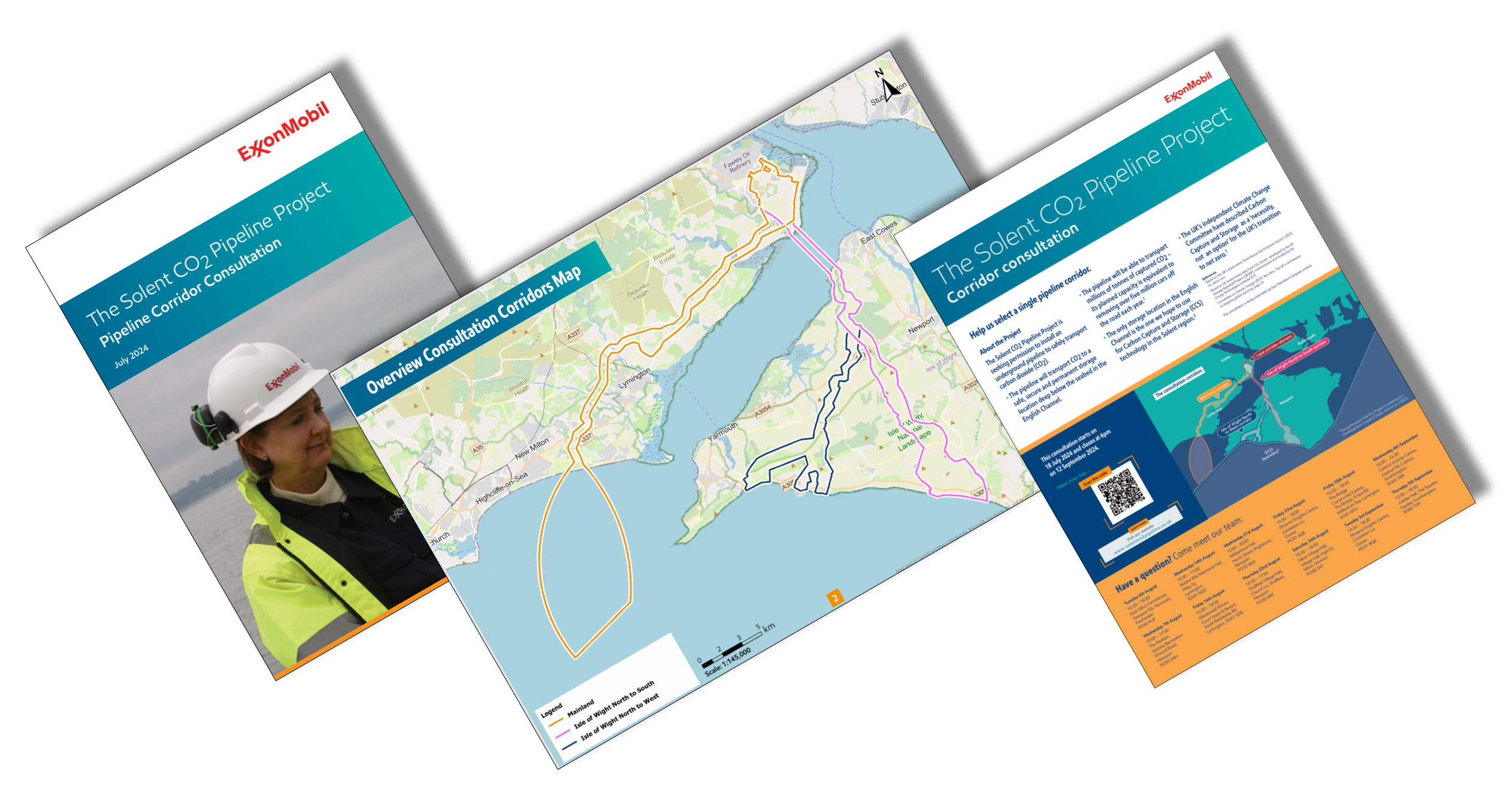
The overall impression is one of a net-zero pipe-dream sold as a fait-accompli:
“ExxonMobil is generously offering to make a huge contribution to the UK’s net-zero carbon target, the answer is a pipeline, all you need to do is is tell the company which of these three routes you would like it to follow.”
The reality is rather different and judging by the public reaction, there are many who have taken away a different message:
“This is a half-baked concept to provide an ‘exhaust pipe’ for Esso Fawley while it carries on milking the declining diesel and carbon-based aviation fuel markets for as long as possible.”
It doesn’t look as if the public events put on by ExxonMobil and Jacobs have swayed opinions. If anything, frustration with the lack of answers given to questions that are deemed ‘off-script’ has hardened public opinion.
We’ve been digging into the facts in an attempt to find the reality between those two extremes over six detailed posts, adding a cautionary tale for would-be objectors at the end.
Here’s the overview, including links to the full articles:
Post 1 (12 Aug 2024)
The ExxonMobil ‘Solent CO2 Pipeline’ Project
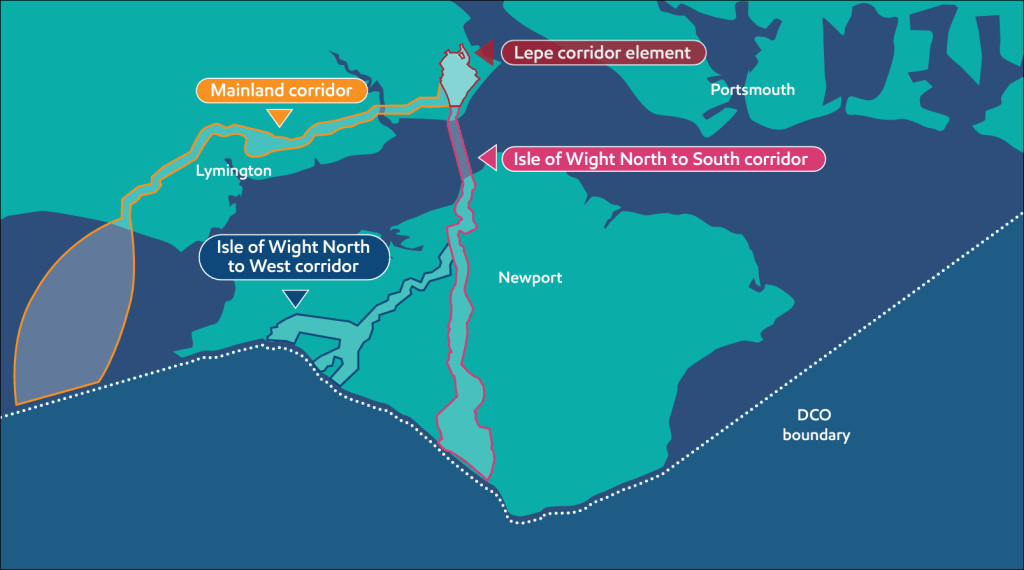
This first post introduced the subject, adding links to a useful Wikipedia article on Carbon Capture and Storage (CCS) and a report commissioned by Greenpeace on the subject of the Oil Industry’s commitment to Climate Change. The consultation documents are introduced with links, and we question the limited shortlist of corridors and the omission of an undersea route.
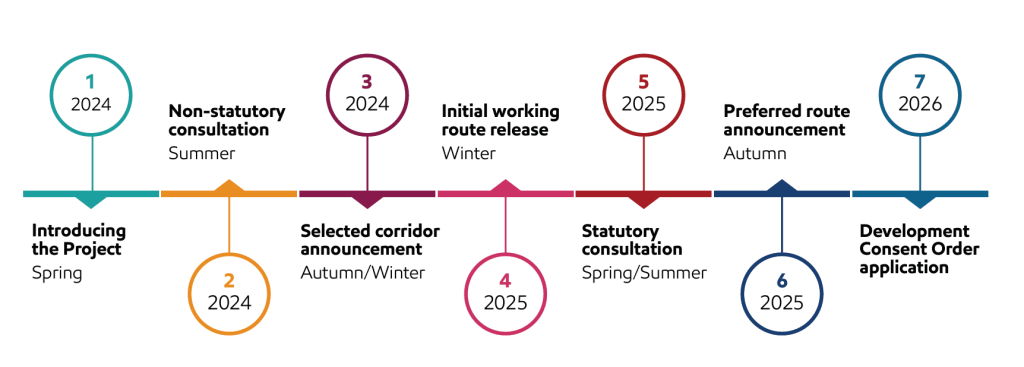
We also discuss the timescales and introduce our concerns over the use of Development Control Orders for projects registered as ‘Nationally Significant Infrastructure Projects‘.
To read the post, click the link below:
Link to Post 1 – ExxonMobil Solent CO2 Pipeline project
Post 2 (19 Aug 2024)
ExxonMobil CO2 pipeline – More Questions than answers
This second post starts looking at the drivers behind the project and in particular, the role of the ‘The Solent Cluster‘, which from its own website appears to be little more than a relaunching of the now disbanded Solent Local Enterprise Partnership. We look at overall project governance, introducing the ‘North Sea Transition Authority‘ and raise the concern over the openness and transparency of the decision process.
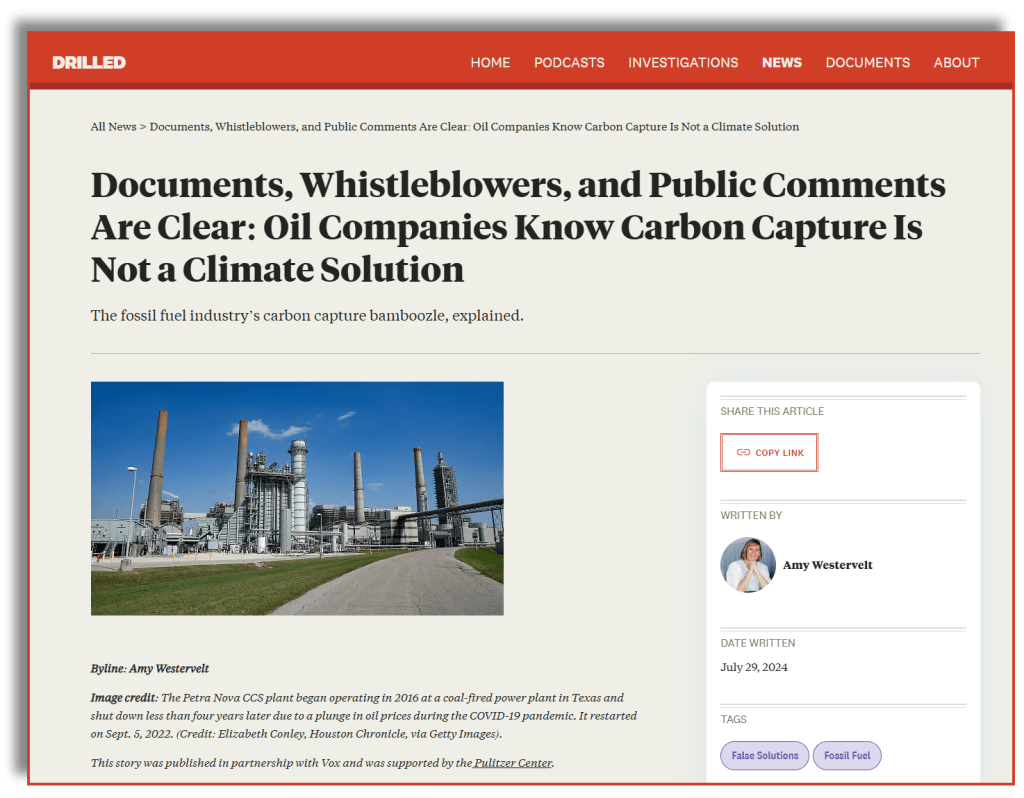
The post also includes a link to a longer read, an important article published in ‘Drilled’, a global multimedia reporting project focussed on climate accountability, which questions the motives of the oil companies and casts doubt on the effectiveness of carbon capture as a viable measure for climate change mitigation.
To read the post, click the link below:
Link to Post 2 – ExxonMobil CO2 pipeline – More Questions than answers
Post 3 – (24 Aug 2024)
ExxonMobil CO2 Pipeline – Context and Governance
In this third post, we started looking further afield, providing links to the principle ‘Industrial Clusters’ already well-placed and defined to engage with the UK Government’s ‘Industrial Decarbonisation Strategy’. The article provides links to several of them, including the East Coast Cluster which along with Hynet NW is setting the pace.
It was in writing this post that it became plainly obvious that not only was ExxonMobil and its apparent marketing alter ego, the Solent Cluster, starting from the back of the pack, but that it remains a long way behind in a larger field of ‘also rans’.
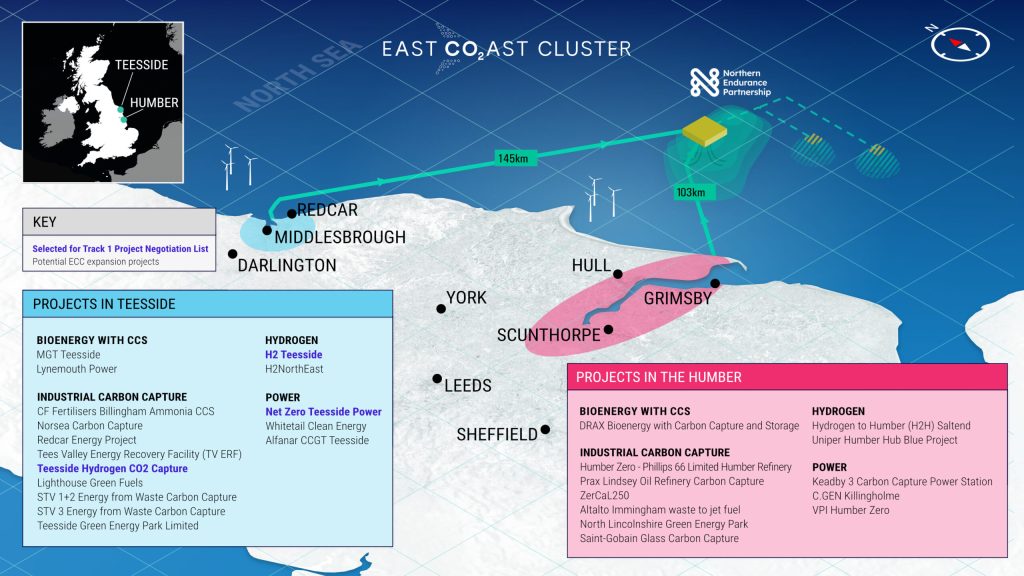
To read the post, click the link below:
Link to Post 3 – ExxonMobil CO2 Pipeline – Context and Governance
Post 4 – (2 Sep 2024)
Solent CO2 Pipeline’ consultation – A deeper look into the missing detail
By the start of September, we’d started putting together a set of slides to facilitate discussions with friends and members. They can be downloaded from this post individually or as a PDF set. Here’s just one, which identifies the missing pieces in the jigsaw.
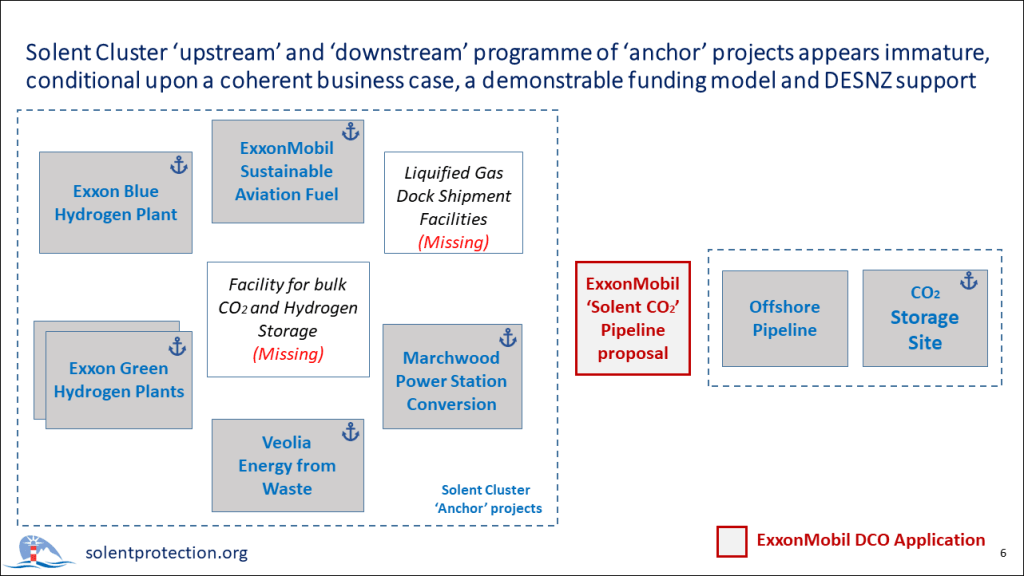
At the end of this post, is a section containing external reference links.
[Note Ed. We plan to update and expand the slides and the list of references as time permits]
To read the post, click the link below:
Link to Post 4 – Solent CO2 Pipeline’ consultation – A deeper look into the missing detail
Post 5 – (9 Sep 2024)
Exxon CO2 pipeline – Coming under increasing pressure
By the fifth post, several of the SPS Council members had attended the ExxonMobil travelling roadshow, with the author joining a well-attended meeting of the New Forest Consultancy Panel at which the ExxonMobil ‘sales team’ gave a presentation to an audience which included representatives from New Forest District District Council, the National Park Authority and numerous town and parish councillors representing the New Forest, Waterside and Solent shoreline communities and many more.
While there was limited time on a very packed agenda for questions, it was clear that many in the audience, mindful of ‘the Satartia incident’, were already very concerned about the operating pressure of the proposed pipeline.
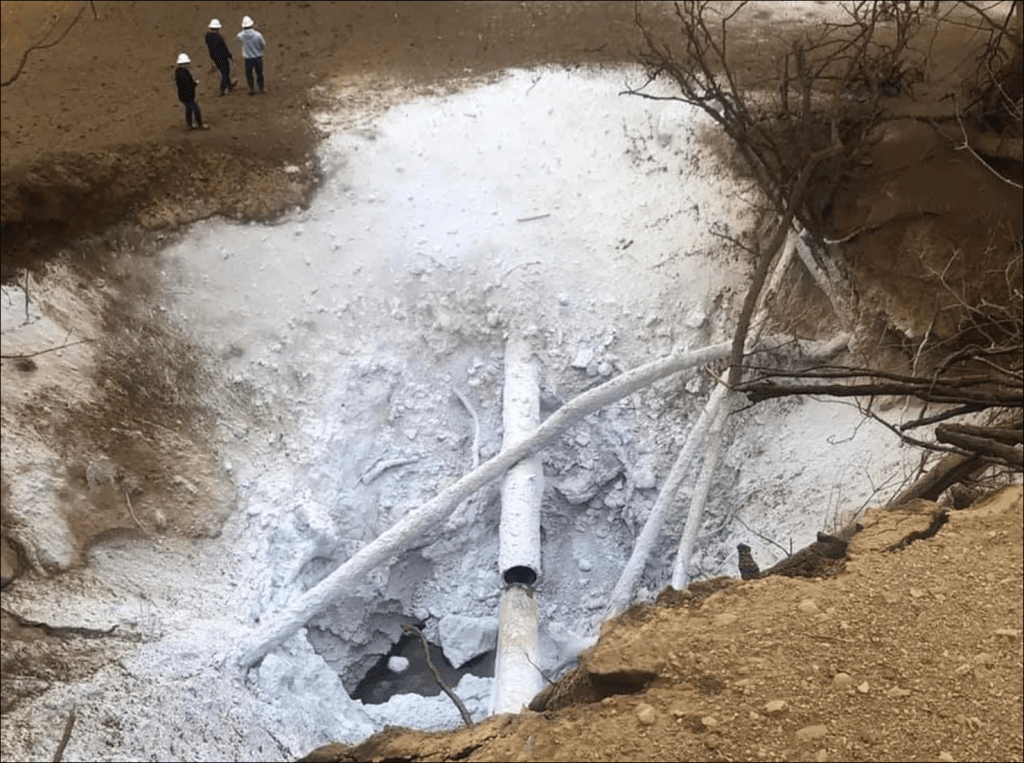
It was at the Lyndhurst meeting that it became evident that the Solent CO2 Pipeline project is being driven by the same project team which successfully delivered the Southampton to London Pipeline project which completed in 2023.
The post also covers the subject of pigs and pigging:
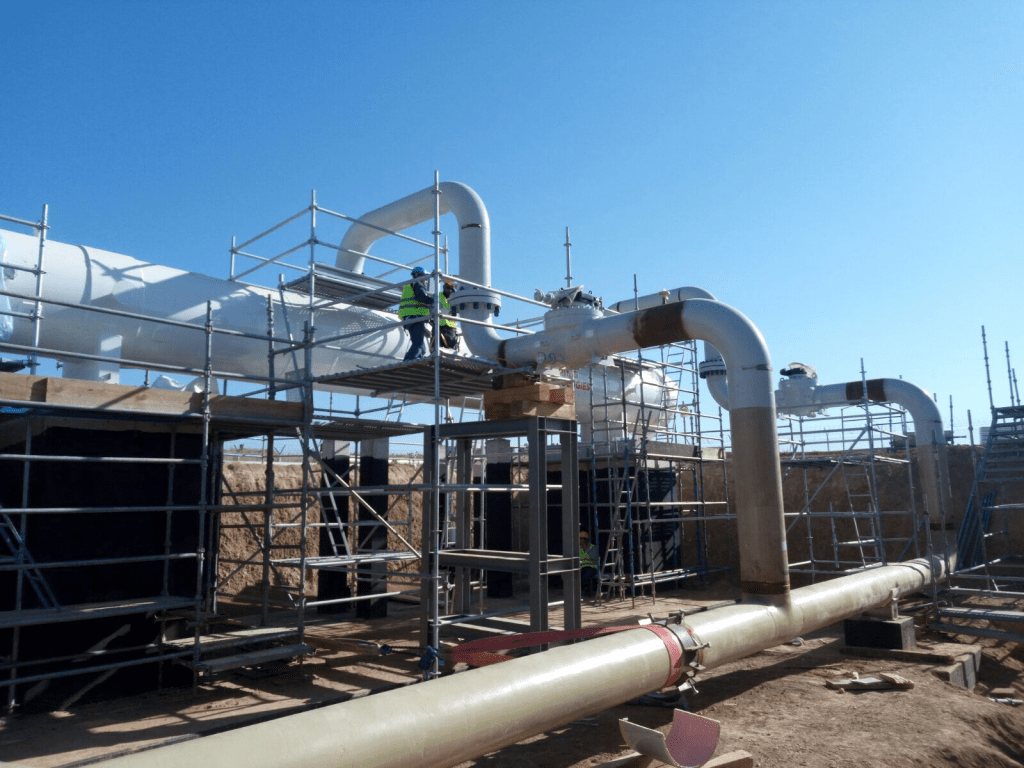
There is a lot more detail in this post, including more about the (clearly feasible) end-to-end underwater route, discussion of the potential for shipping liquid CO2 by sea and concerns about the risk profile of the overall programme of work. Also covered are concerns over ExxonMobil’s ability to meet its ‘biodiversity net gain‘ objective, given known problems with the re-establishment of the habitat following the Wytch Farm pipeline work, thirty-five years ago.
There is much more contained in this long read, which you can check out by clicking the link below:
Link to Post 5 – Exxon CO2 pipeline – Coming under increasing pressure
Post 6 (16 Sep 2024)
ExxonMobil’s answer is ‘a pipeline’ but in 2024, what should the question be?
In this most recent post, we start to seriously question the need for a pipeline at all, highlighting the significant partnerships, built on the international cooperation between the North Sea oil and gas producing companies over the past half century of exploration. The article links to many of these companies, and includes similar initiatives by other maritime nations as far afield as Australia and Asia Pacific.
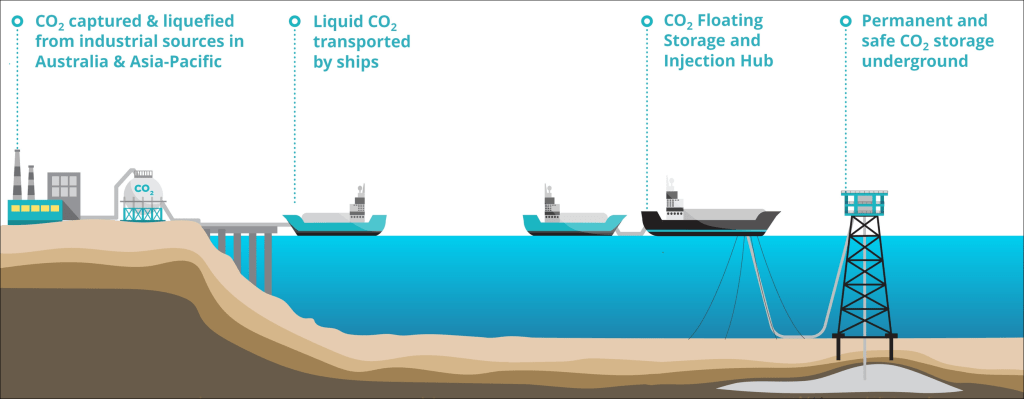
The article takes a deep dive into the real industry thought leaders and the various overarching consortia that are already well established, including one that includes ExxonMobil among its members. It really doesn’t take long to conclude that there is actually no need for a pipeline at all and that ExxonMobil already has established partnership deals with outfits that could provide a lower risk, more flexible, deliverable solution to their fundamental problem, the need to decarbonisation the Fawley site.
But do they actually want to? To read the post, click the link below:
Link to Post 6 – ExxonMobil’s answer is ‘a pipeline’ but in 2024, what should the question be?
Post 7 (24 Sep 2024)
ExxonMobil CO2 Pipeline – Observations on the arguments and challenges
It’s been encouraging to monitor the spirited discussion on social media relating to ExxonMobil’s non-statutory consultation on its ‘Solent CO2 Pipeline’ proposal.
With one week to go before the formal consultation period closes, it’s worth reflecting on what the community is commenting on, to whom they should be raising those comments, and who the key decision makers will be. In this post we look at the growing number of arguments against the ExxonMobil CO2 Pipeline proposal and assess some of the likely challenges to those arguments.
Link to Post 7 – ExxonMobil CO2 Pipeline – Observations on the arguments and challenges
A cautionary note for would-be objectors
Esso Fawley (aka ExxonMobil) know all about the construction of pipelines, and in particular pipelines built across rural, residential and sometimes sensitive landscapes using the powers available under the Planning Inspectorate’s ‘Nationally Significant Infrastructure Project (NSIP)’ process.
The company’s last ‘big project’ was the Southampton to London Pipeline project, managed by the same team at Jacobs that is lined up to deliver the Solent CO2 Pipeline if or when the Planning Inspectorate accept the Development Consent Order, DCO, and the Secretary of State for DESNZ approves the development plan.
ExxonMobil were faced with public objections to the Southampton to London Pipeline along much of its 97km route, with many concerned about the potential damage to protected hedgerows, trees, and other natural habitats along stretches of the pipeline route, arguing that the construction could lead to significant ecological disruption. Now that sounds very like the kind of objections that they would receive should the Solent CO2 Pipeline proposal get the go-ahead.
As far as the Solent CO2 Pipeline is concerned, if permission is granted for the Development Consent Order, then ExxonMobil will undoubtedly use the same ‘prosecute and publicise’ approach to objectors that they used on the SLP project.
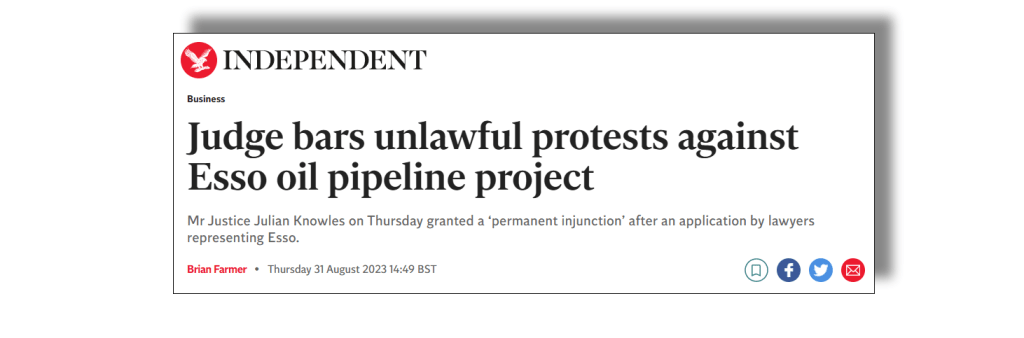
The most effective way to try and achieve a sensible outcome is to ensure that your elected representatives at the parish, town, borough, county and parliamentary constituency levels are all armed with the facts. With this series of articles, SPS has flushed out a fair amount of the missing content, referencing our sources by external links within each post.
There will, however, be oil industry commercial and UK government political agendas to which we have no access and over which the public and their local authorities have little influence. The industrial lobby has funds, lawyers and political influencers. What concerned individuals and communities have to do is engage with elected representatives to use their democratic networks and ensure that the full facts are available, ‘up the line’ to their bosses.
Perhaps send them the link to this summary and suggest they settle down with a suitable beverage and start reading!
 Solent Protection Society