
There are two sides to the water utility companies’ operations; waste water processing and drinking water supply. In the Solent region a single company, Southern Water, manages the waste water needs for all and the drinking water supply for a large area including the Isle of Wight.
Portsmouth Water supplies drinking water from its natural chalk-fed springs in Havant for customers in its local supply area, which stretches from Fareham to Bognor.
Waste water management
For the past four years Solent Protection Society has been concentrating on the issue of Southern Water’s combined sewer overflow discharges (CSO) into our harbours, estuaries and seaways, covering the worrying upward trend in this recent post.
During this period, we have seen at first hand the costly challenges faced by the national water utilities demonstrated locally around the Solent in highly-visible failures of Southern Water’s vast and ageing infrastructure. On the waste water management side, we have seen a number of long-term, highly disruptive surface and underground infrastructure repair and relining works in urban areas on both the mainland and the Isle of Wight.
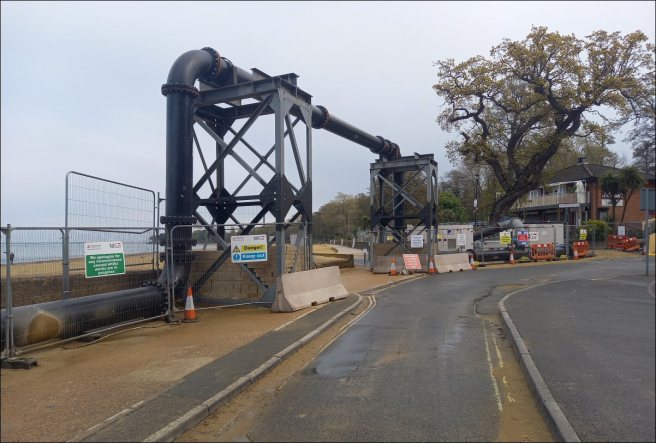
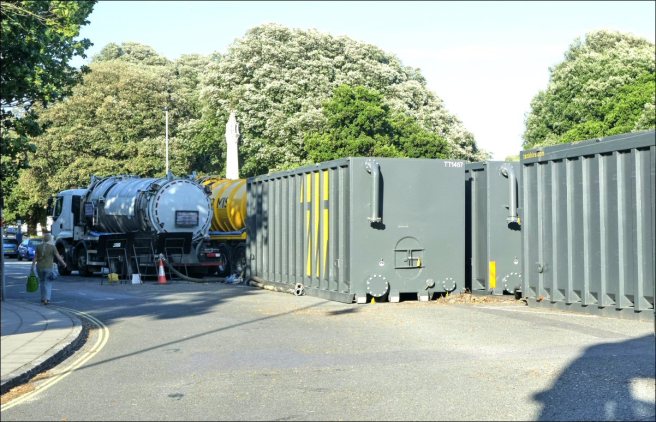
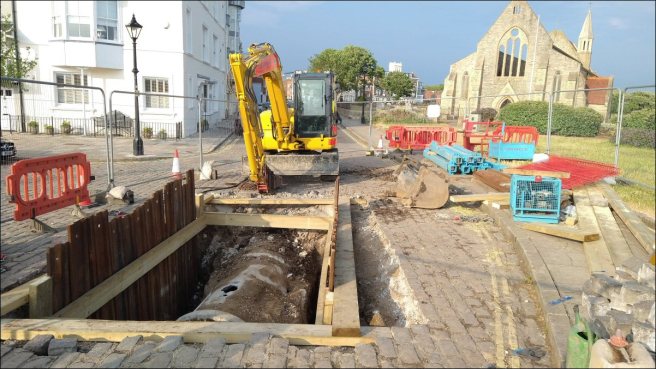
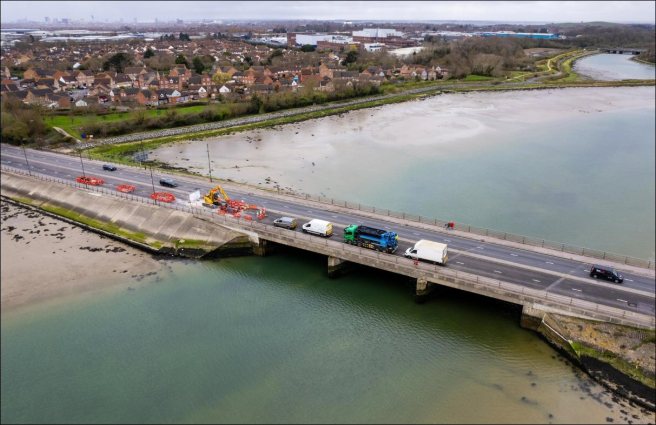
Towns and cities around the Solent shore rely heavily on an ageing sewer infrastructure which will be increasingly prone to failure as the sea level rises. For Portsmouth, a densely populated industrial and port city reliant on just three bridges for road traffic access, the commercial impact is significant and mounting.
After years of reported under investment, there will be significant cost associated with overdue and emergency corrective and preventative maintenance work, including the additional costs associated with the emergency distribution of bottled drinking water and the transfer of sewage by road tanker. While the company’s Clean Rivers and Seas Plan highlights the individual cost estimates for work on selected elements of its infrastructure, the risk of failure and the consequent need for emergency work at any point across the network will be increasing with the age of the local infrastructure assets. Significant contingency funding must surely be required to mitigate that risk?
Water supply management
Waste water management is just one side of Southern Water’s business in need of network infrastructure improvement. Away from the shoreline, the public has witnessed increasing numbers of failures in the public water supply and distribution network.
Over the past four years, SPS has also been paying close attention to the potential environmental impacts on the Solent of Southern Water’s ‘Water for Life’ program for drinking water supply. In 2021, the Society objected to the company’s locally-controversial proposal to build a desalination plant at Ashlett Creek, near Fawley. The impact on the Solent of the concentrated warm brine which would have been released into sensitive waters by the plant was a significant factor in the decision not to proceed with the proposal.
Southern Water’s latest ‘Water for Life’ public consultation in Summer 2024, concerned the company’s current proposal for the ‘Hampshire Water Transfer and Water Recycling Project’ and its impact on Portsmouth Water’s Havant Thicket Reservoir project, currently under construction north of Havant.
The Society’s response to Southern Water’s latest Water for Life public consultation begins as follows:
“Solent Protection Society objects to Southern Water’s ‘Hampshire Water Transfer and Water Recycling Project’ (HWTWRP) on environmental grounds. While the Society recognises the broad range of valid concerns arising from this consultation, this response focuses on the environmental concerns relating to the impact of the proposals on the harbours, estuaries, shoreline and water bodies of the Solent.
The Society also has concerns about the financial viability of this project given the current cost estimate of £1.2 billion, a sum which will doubtless increase as design and construction proceeds. This massive investment to address a future risk of water supply shortfall during summer drought periods provides no relief for the impact of Southern Water’s very real and evident shortcomings in waste water management. There is a more urgent need to reduce the scale of the company’s ongoing CSO discharges into Solent waters and to address the frequent and disruptive operational failures of the existing water supply and sewerage infrastructure. The pressing need for corrective and preventative maintenance on the existing underground networks will require significant additional financial investment.”
Click anywhere on the text in this blue box to read the full SPS ‘HWTWRP’ consultation response.
Opposition to the Ashlett Creek desalination proposal in 2021 began with the Southern Water residential customer base around Fawley. In a similar fashion, it has been the local community around Havant that has been spearheading responses to the latest Southern Water consultation. The company proposes to recycle treated effluent from the Budds Farm waste water treatment works into drinking water using the same energy-intensive reverse-osmosis technology proposed for desalination at Ashlett Creek. While the technical feasibility of the approach is in little doubt, the overall construction and proposed operations raise a much broader range of environmental and sustainability concerns than the earlier, simpler, desalination proposal.
Before transferring the recycled treated effluent to its final treatment plant at Otterbourne via a new 24km pipeline, Southern Water would need to blend the output with a freshwater source in an ‘environmental buffer lake’. To that end, the company proposes to use the Havant Thicket Reservoir, Portsmouth Water’s long-planned chalk-spring reservoir which is currently under construction north of Havant.
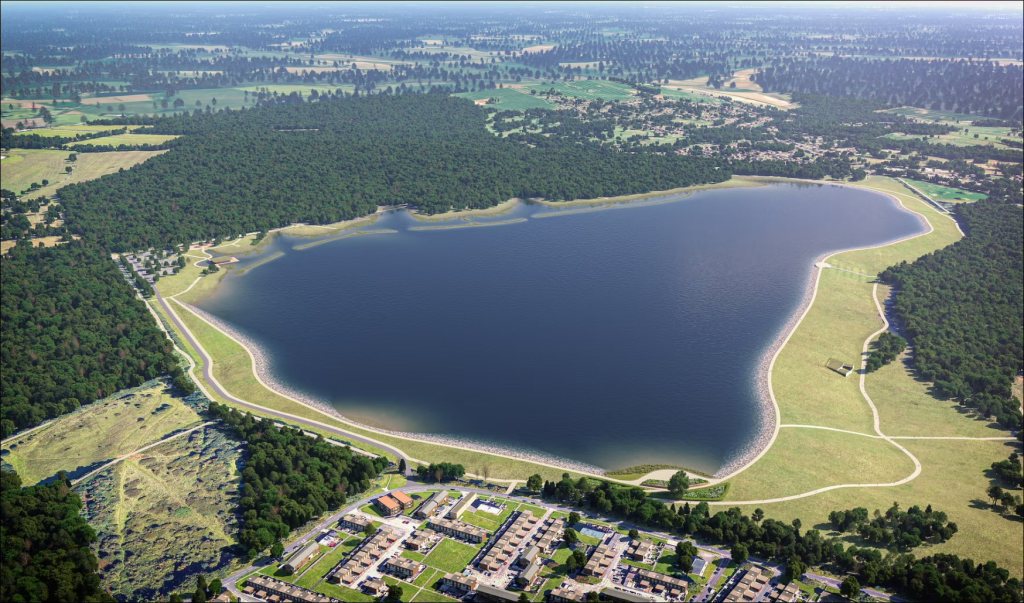
The Havant Thicket Reservoir construction project received local authority planning approval in 2021 on the assurance that it would be used solely for the storage of natural water from Havant’s abundant chalk springs. Those springs have been managed successfully by Portsmouth Water for its own customer base which spans the northern side of Solent from Fareham to Bognor. The provision of the new reservoir would have enabled the storage and future use of the natural winter peak supply from the springs, as a safeguard against future drought.
While the Society’s concerns focus on the proposed Langstone Harbour location of the recycling plant, its interaction with Solent via the Eastney long sea outfall and its impact on the Havant Thicket Reservoir, the geographic scale of the project is significantly greater, as the following slide from the consultation ‘Book of Maps’ demonstrates.
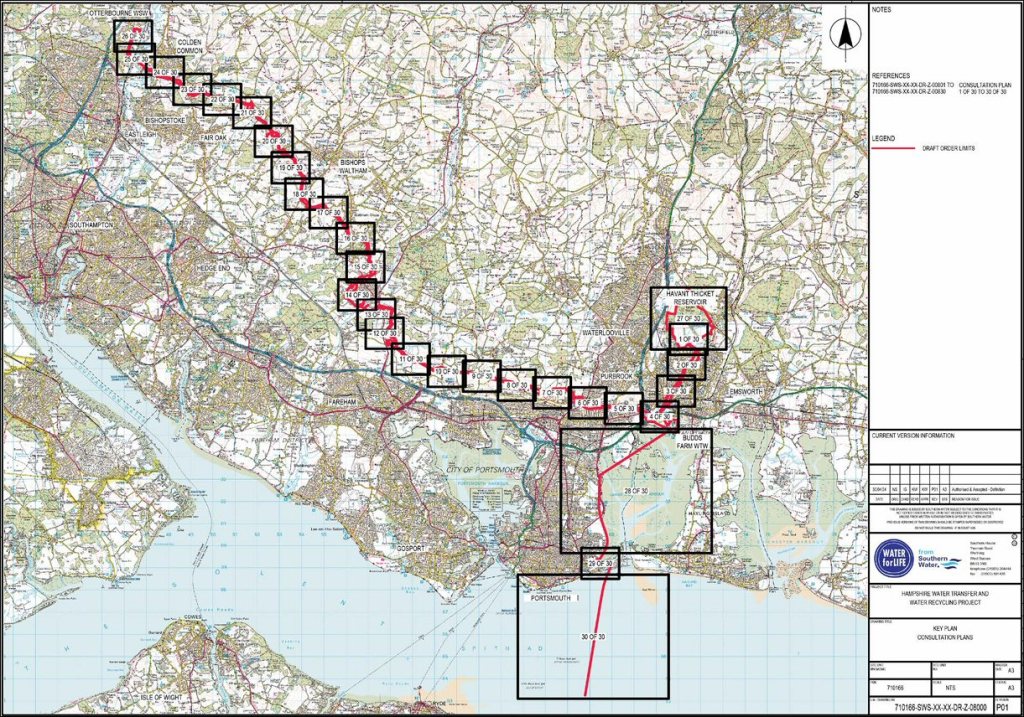
Click the map image to view the component maps in the book. The consultation library in its entirety can be viewed at this link.
Southern Water is seeking a Development Control Order from the Secretary of State to drive the Hampshire Water Transfer and Water Recycling Project forward, taking effective planning control away from the local authorities. Meanwhile there is increasing opposition from the wider Portsmouth Water customer base, both to the Southern Water’s perceived ‘hi-jacking’ of the spring-fed reservoir project and to the prospect of recycled effluent as a drinking water source.
Further references
- Southern Water – Water recycling hub
- Portsmouth Water – Havant Thicket Reservoir
- Havant Matters – Local community consultation reference site
- The Observer – 13 July 2024 – a summary of the issues raised by the Southern Water HWTWRP consultation
- ‘Drone Local’ aerial fly by showing the Havant Thicket reservoir construction site (© Paul Minay, Facebook)
 Solent Protection Society