
Our recent article on sewage spills from Southern Water facilities around the Solent highlighted the combined sewer overflow (CSO) at Pier Road, Southsea which has recently been making adverse headlines for Southern Water for reasons other than simply its discharge history. The news concerns ’emergency’ repairs to a collapsed section of the storm drain somewhere between the Pier Road pumping station its outfall pipe which emerges just south-east of Portsmouth Harbour entrance near between Long Curtain moat and the Square Tower.
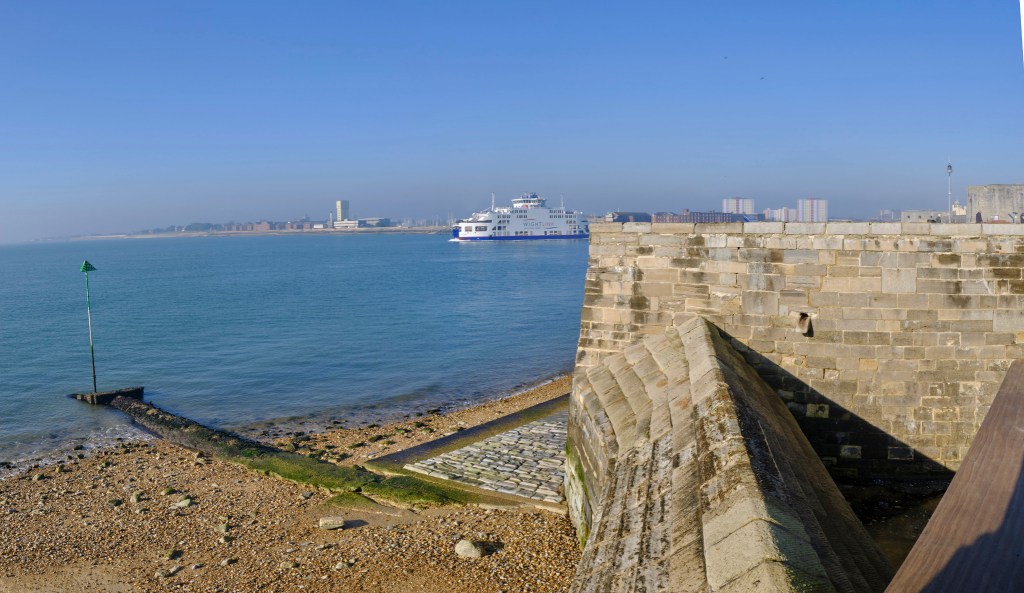
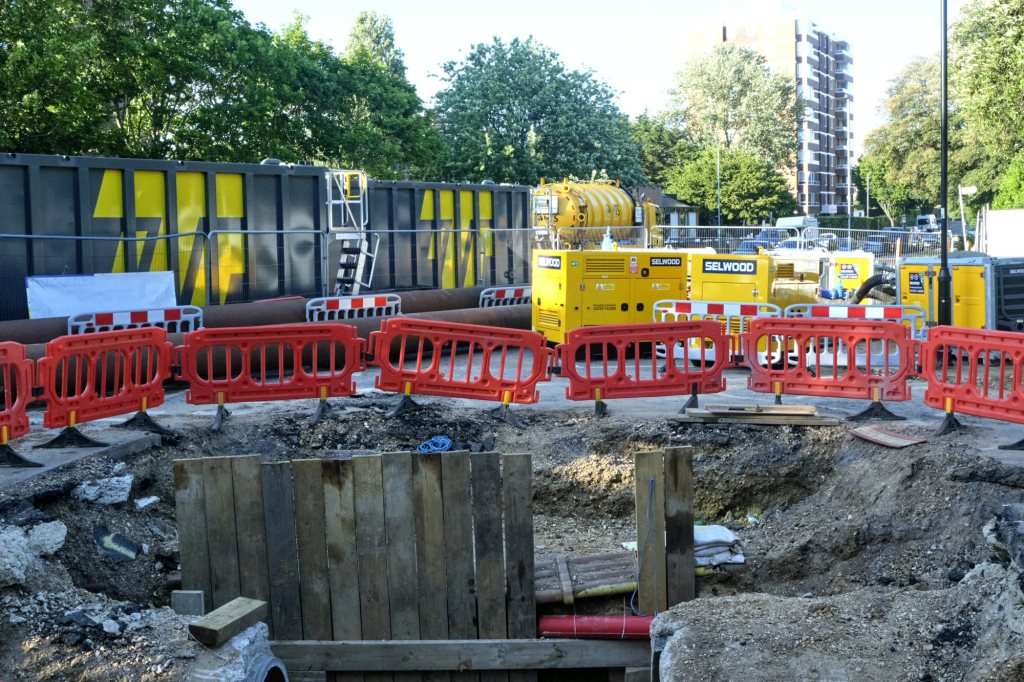
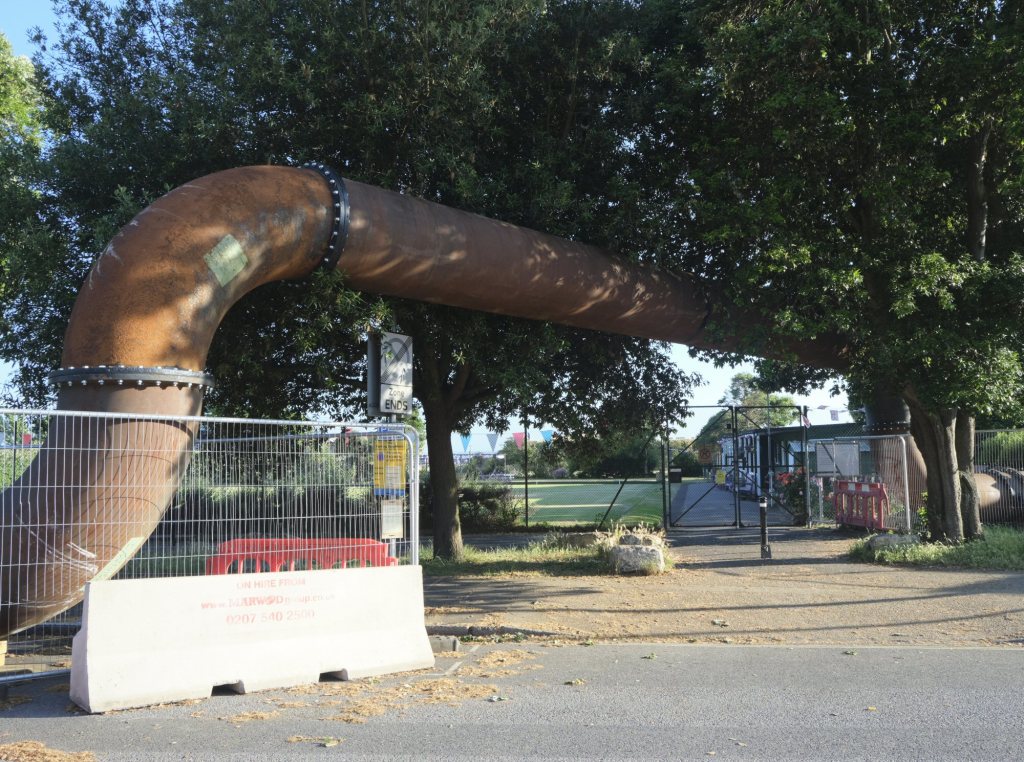
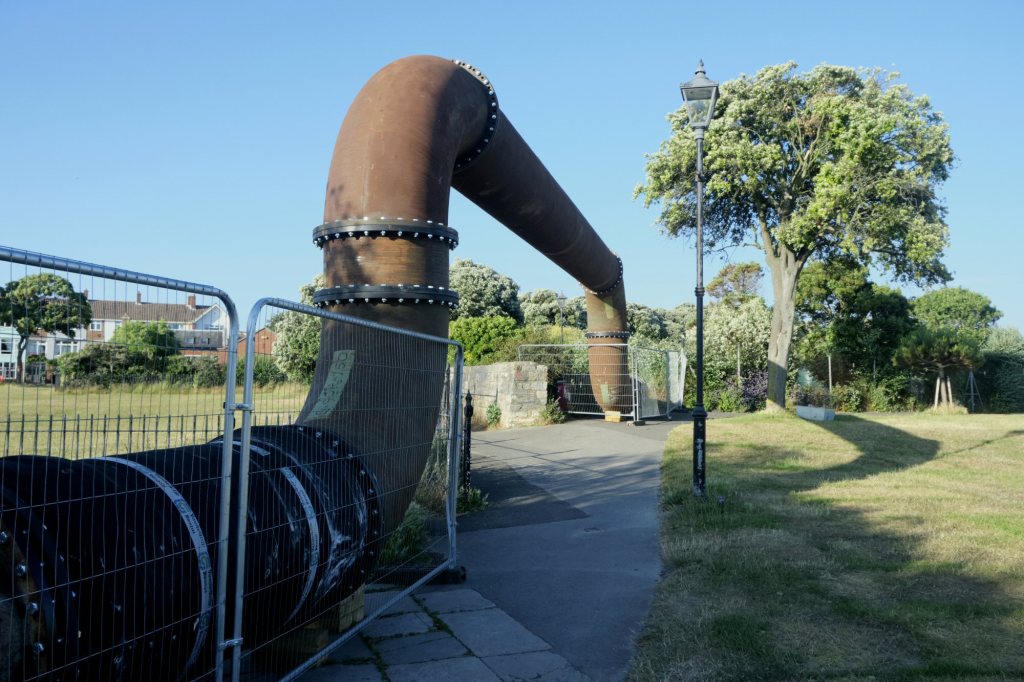
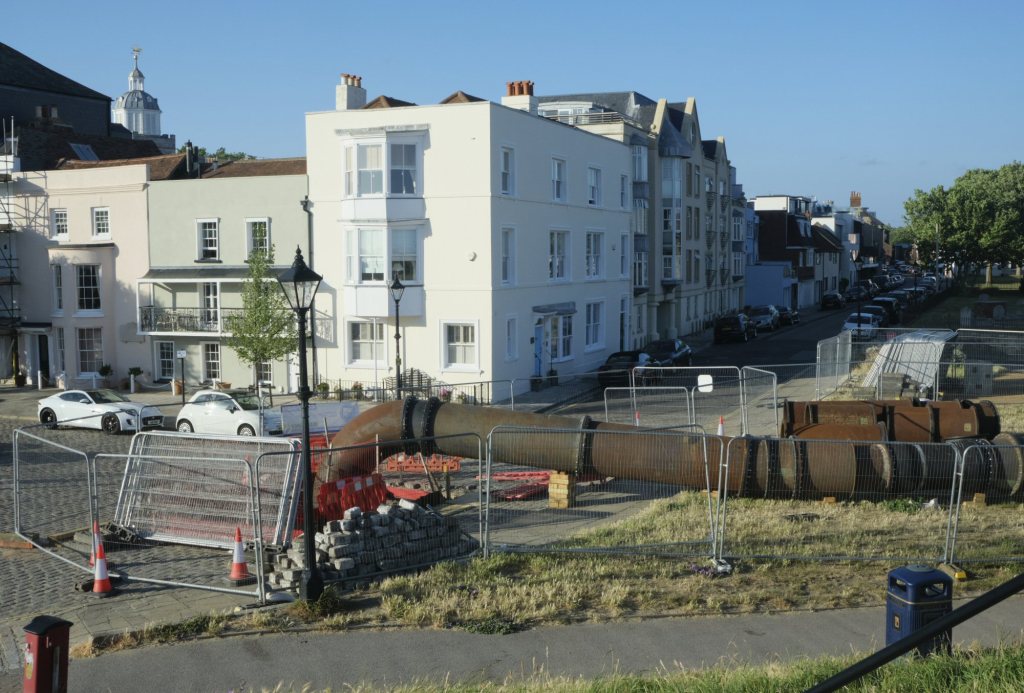
The sequence of images below shows the site of the excavations which have exposed the drain at both the pumping station in Pier Road and at Old Portsmouth’s cobbled Grand Parade, together with the route of the massive overground steel pipe which has been constructed to join the two sites.
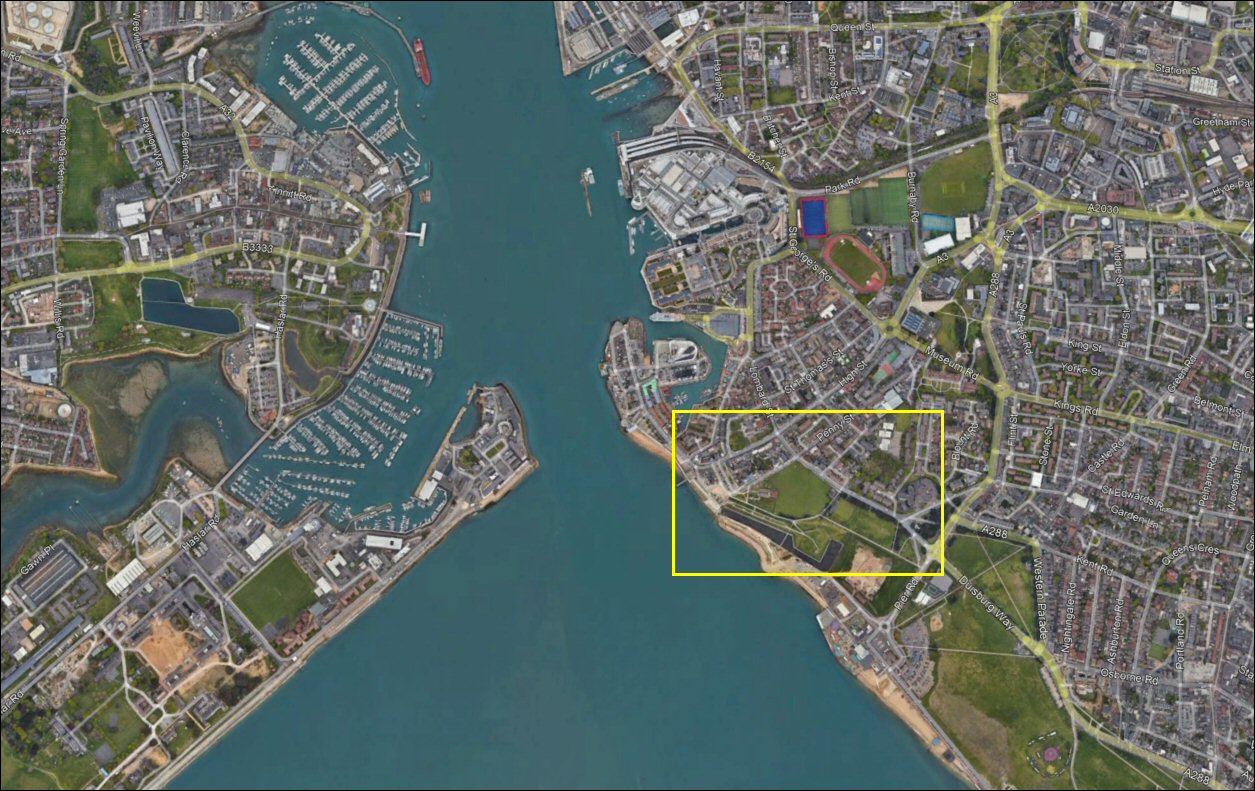
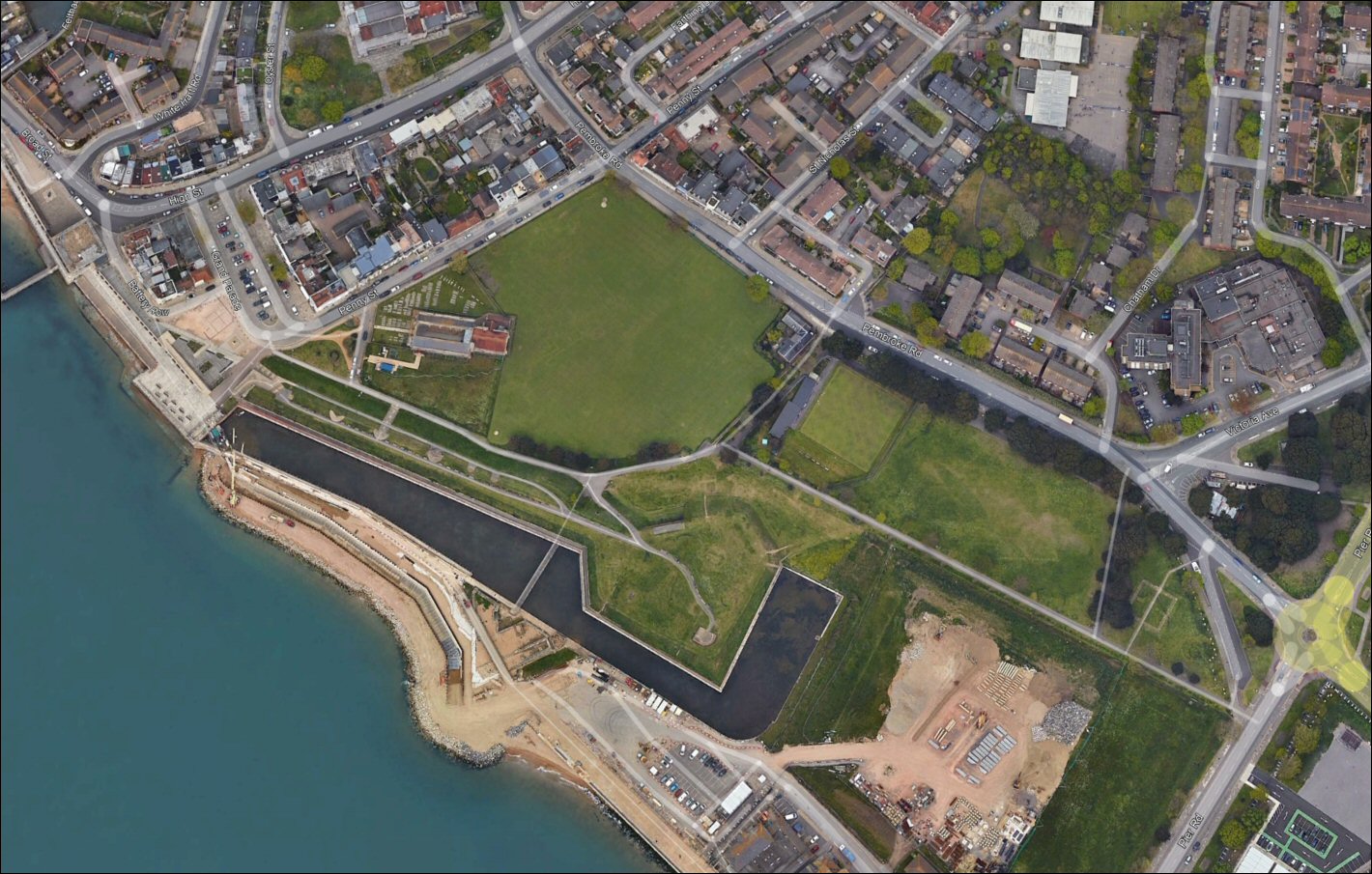
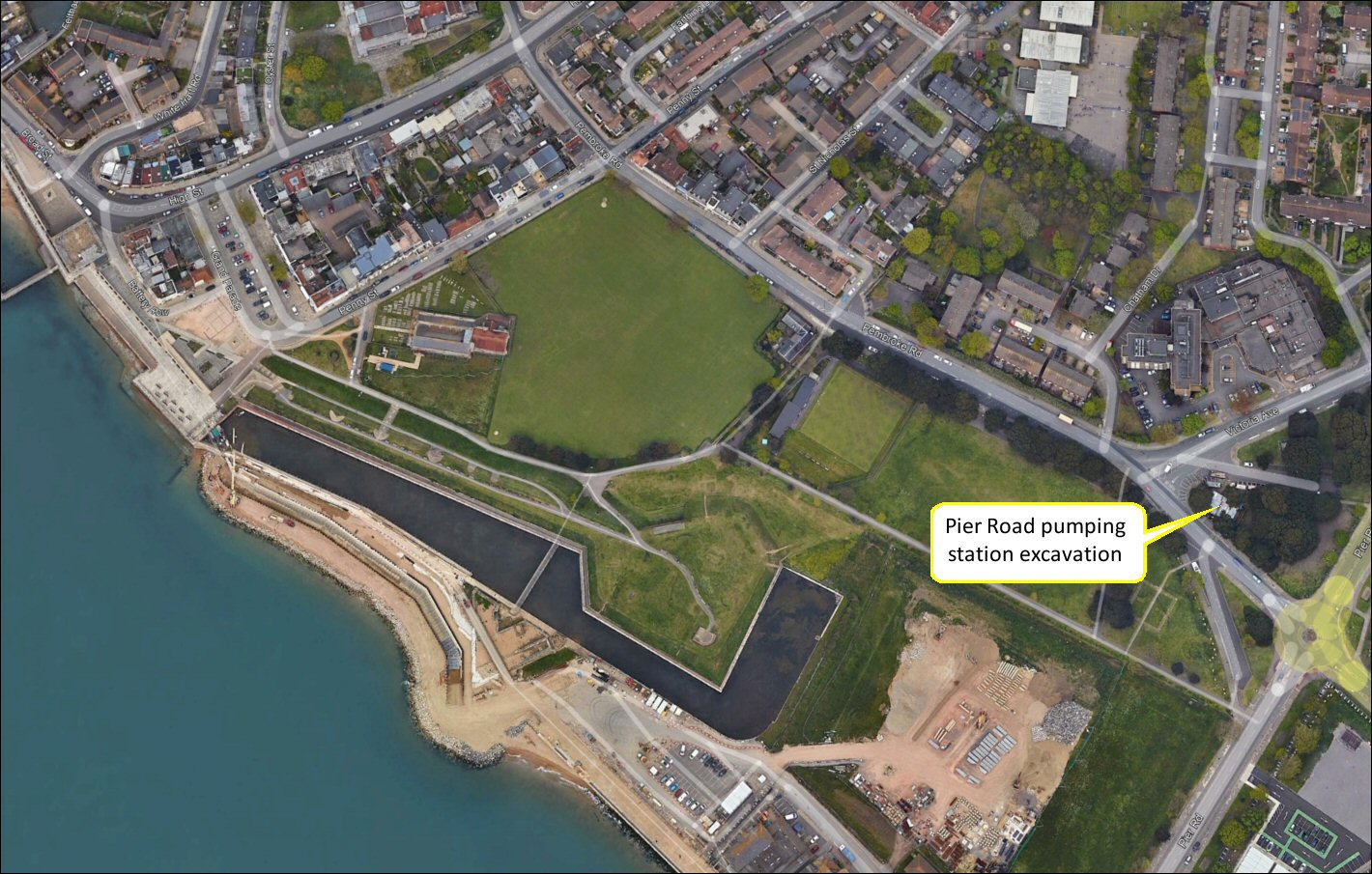
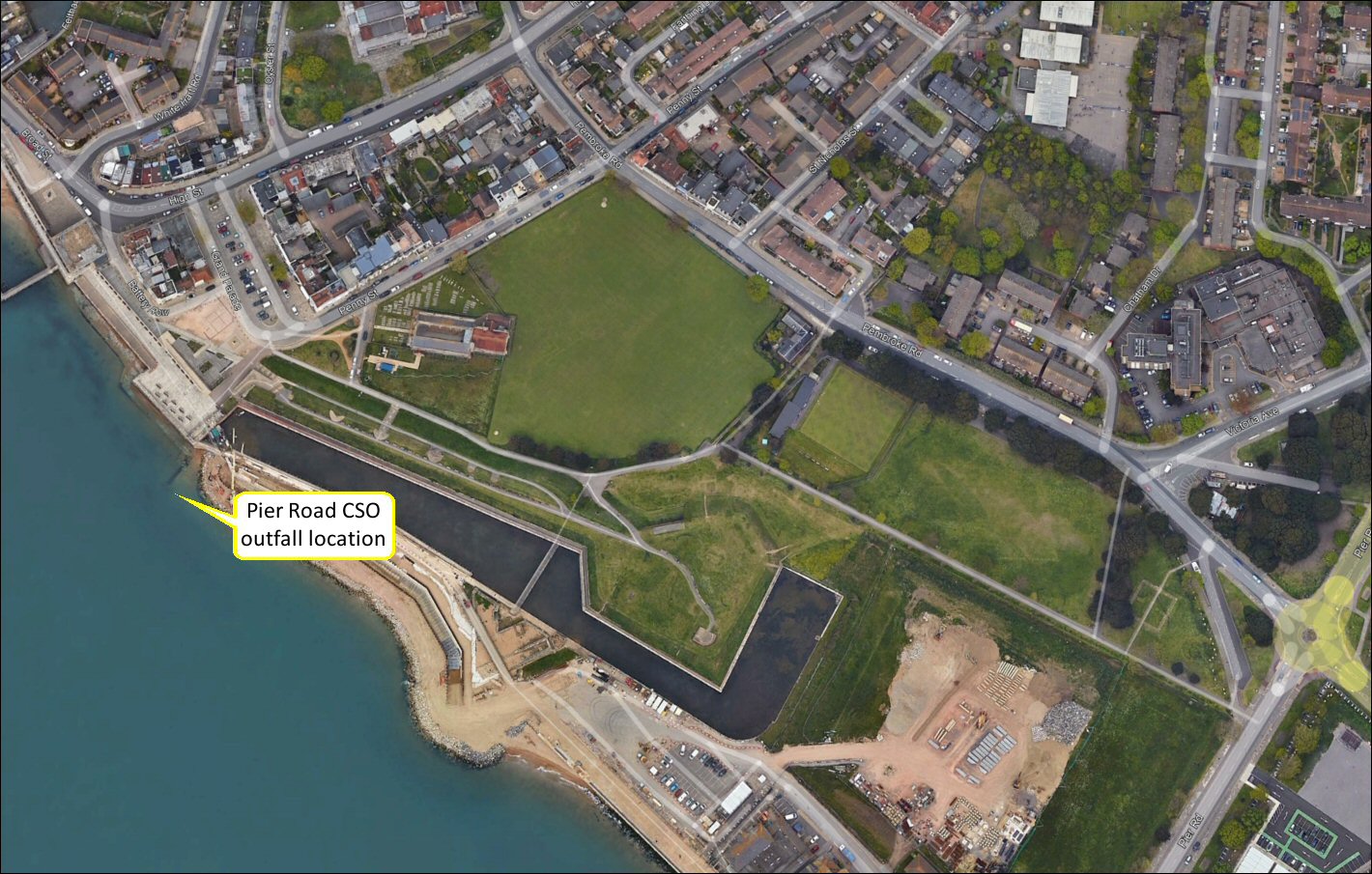
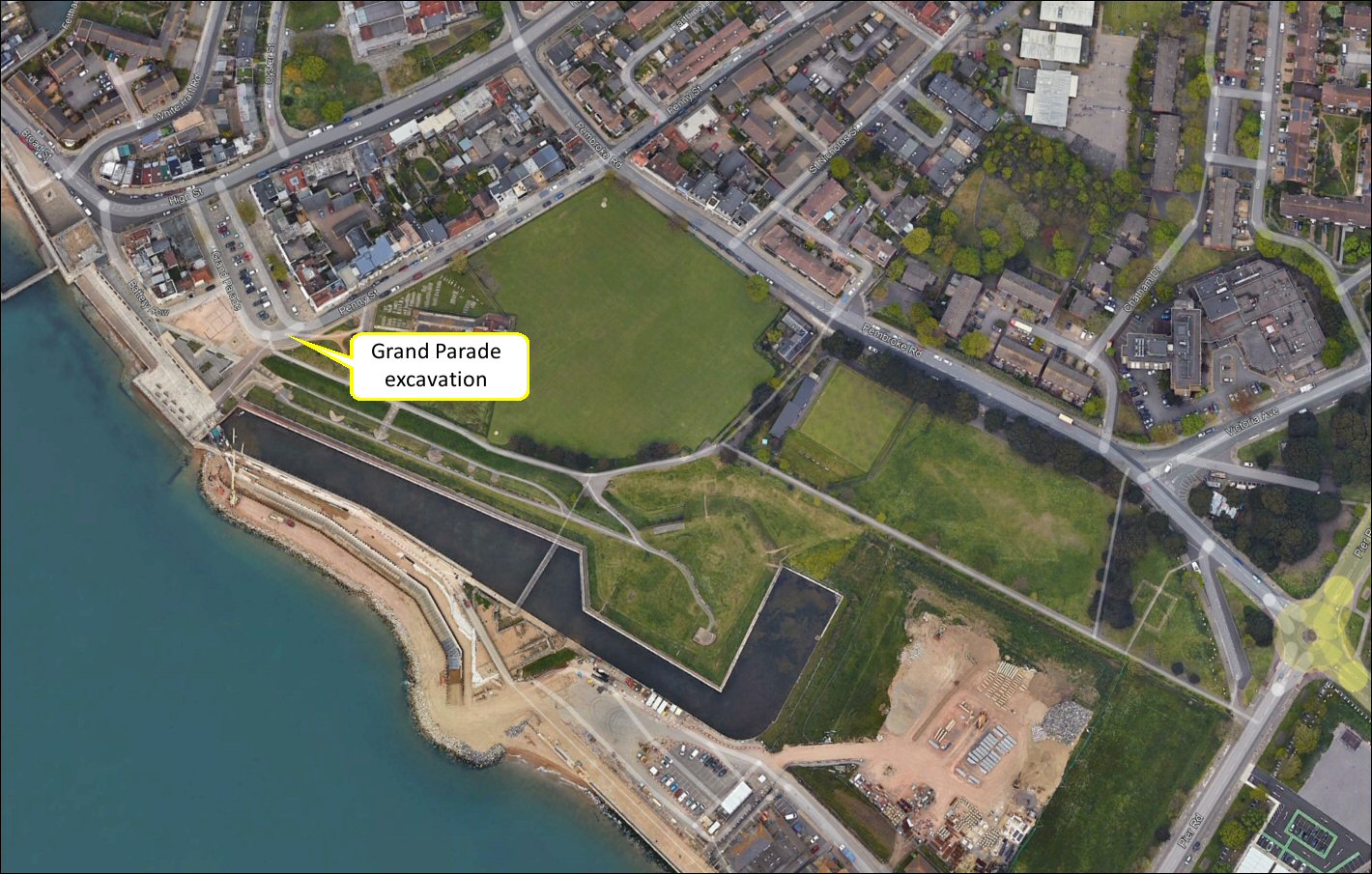
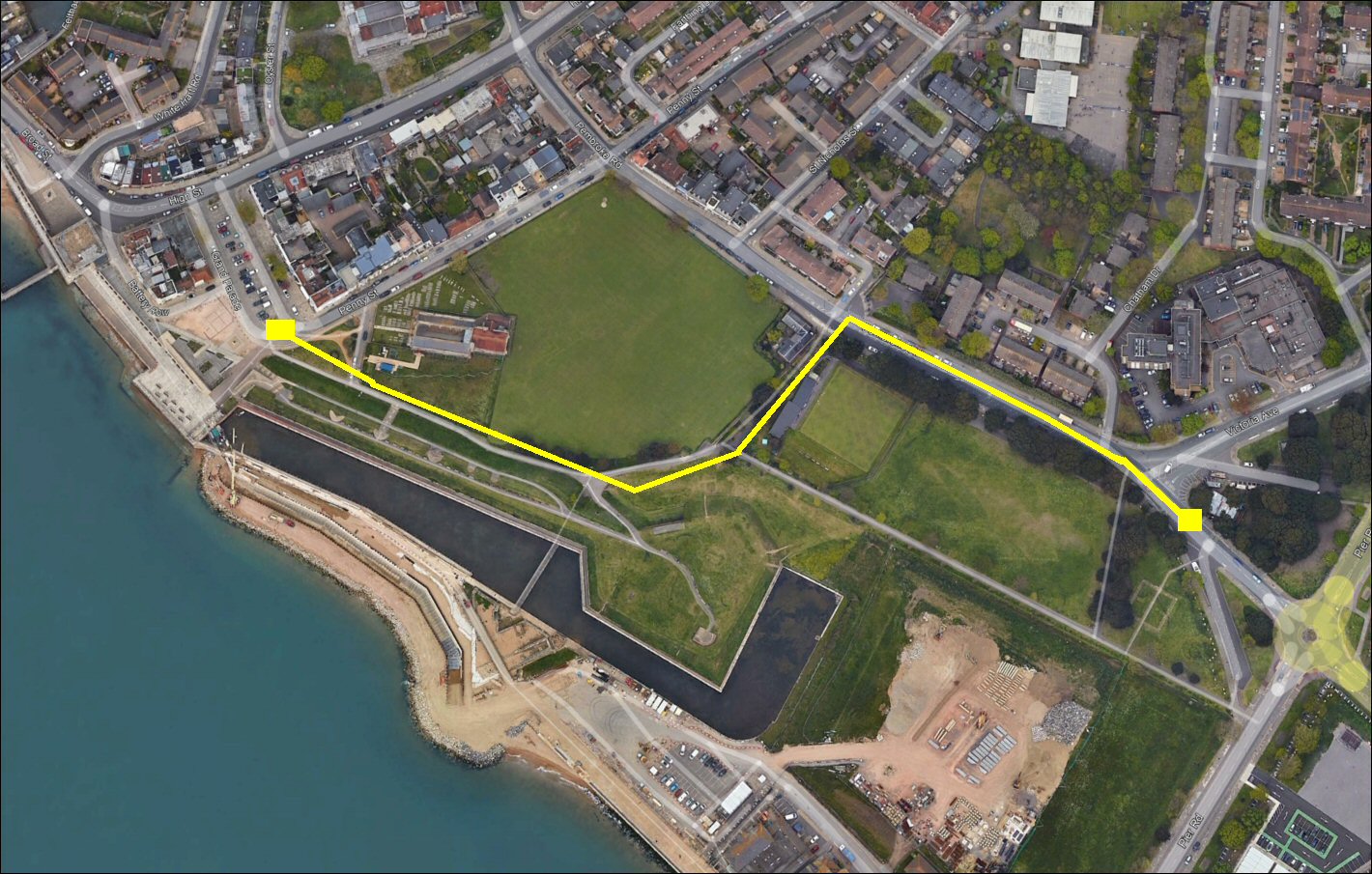
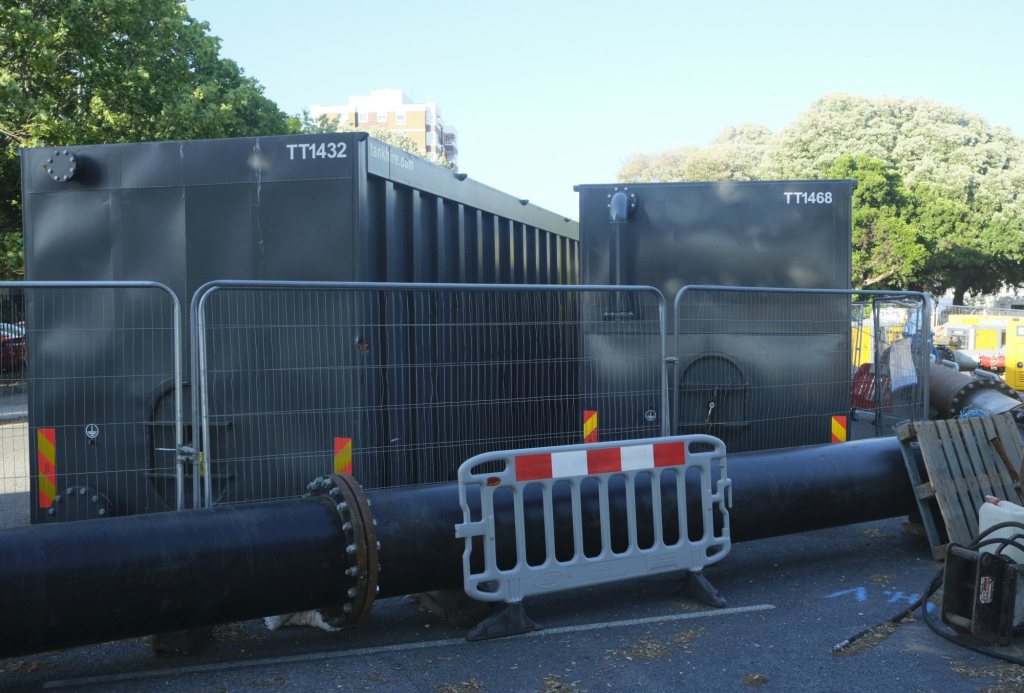
At the Pier Road end, container-sized tanks have been set-up to enable temporary storage of waste water pending transfer to the Budds Farm wastewater treatment facility by an on-site fleet of road tankers.
Local anger is focussed on Southern Water’s inexplicable absence of information about the works, the lack of warning of the disruption caused by road closures, the lack of any clear explanation of what is being done and why, and the lack of any published programme of work giving milestone dates. Southern Water’s web page for water-related issues in your area gives no hints and it was only when local residents complained to their local Councillors and to the local Solent Protection Society representative, with the BBC highlighting the story on its local radio broadcasts and website that some limited information started to emerge.
BBC Radio Solent presenter Alun Newman, together with senior reporter Dominic Blake, covered the issue on Alun’s morning show on BBC Radio Solent on 20 June, challenging Southern Water on the subject of the lack of communication. You can hear an edit of the relevant programme segments by selecting the video below. (The full BBC Radio Solent programme can be found on BBC Sounds.)
Alex Saunders, Project Head of Wastewater networks for Southern Water gives his response to the question of lack of communications in this section which you can hear by selecting this link. Mr. Saunders said that “we’ve certainly made some efforts to make up on some lost ground there” while admitting that “we’ve clearly got some work to do”.
The interview closes with an assurance from Southern Water that “we’re working hard to make-up for lost ground and we’re hoping to get banners on site doing a better job of explaining what we’re doing. But look, we tried to seize the opportunity, bearing in mind things like Victorious Festival that are coming down the road, but you know we’re working hard to make sure that we we keep everyone in the loop because overall this is a good news story. This is investment in Portsmouth to protect people from flooding, but we obviously just need to make sure that everyone understands why we’re there.”
Seven days on from that interview, it is something of a mystery to find that the website still hasn’t been updated, no banners have been erected and still no detailed explanation of this ‘good news story’ has been offered.
The scale of the works are such that detailed planning and scheduling of plant, materials and subcontractors must have been in place within Southern Water well in advance of the ‘opportunity being seized’ . Local residents are left with the impression that the lack of communication, both with the public and with the authorities, simply reflects the fact that Southern Water have used the declaration of an emergency to shortcut normal protocols for notification of planning, road closures and, indeed, publicity.
Work on the Pier Road pumping station has been going on for more than a year and this current phase of the work, with road closures and the overland pipework starting in early May. Portsmouth City Council did not issue a temporary traffic restriction order until 9 June, and then only effective from 17 June, long after Pembroke Road had first been closed suggesting that the local authority had little more notice of the start of this work than the residents and local businesses who are bearing the brunt of it.
Given the complexity of the programme, the plans should have included more timely communications, with the relevant local authorities, the emergency services and the local residents. In response to a barrage of complaints, Southern Water eventually dropped a letter through the doors of a few houses in the vicinity. Instead of providing clear information, website links and contact details for follow-up, the superficial nature of the flyer did nothing to calm local tempers. While Southern Water try to pass the works off as being an “investment in Portsmouth to protect people from flooding”, it looks rather more like a major programme to repair a collapsed main sewer, much the same as the works undertaken on the Appley sewer in Ryde IoW eighteen months ago. The Appley Pk Ryde CEO (combined emergency overflow) is another of the 37 worst performing outfalls in our analysis of the EA 2022 data.
Local historians have raised concerns about the archaeological importance of the site and additional permits which should have been sought before these works were started. It is believed that a Tudor tunnel exists which runs from the 13th century chapel of Domus Dei to the Square Tower, running immediately underneath the run of the temporary overground sewer. The fear is that the tunnel’s structural integrity could be compromised by the weight of the pipework and the heavy plant machinery working above it.
Lack of communication is a missed opportunity
Despite the fact that there are hundreds of square metres of fencing available for hanging information posters, Southern Water have missed the opportunity to, as one resident and Solent Protection Society member interviewed put it, “come along to an open local forum and turn a bad story into a good one”. Residents find the lack of communication from Southern Water all the more surprising given their positive experience of working with the construction the Old Portsmouth frontage of the Southsea Coastal Scheme. Southern Water could learn much from Coastal Partners on the subject of programme planning and engagement with residential stakeholders. Particularly given the fact that those residents are also bill-paying customers.
We are sure that Southern Water will have ’emergency plans’ ready for these events, however the level of engagement with the local authorities, emergency services, residents and businesses appears low, giving the perception that the company is using ’emergency plans’ to conduct what looks like overdue preventative maintenance activity. A responsible industry recognises the cost-effectiveness of preventative maintenance and since this is the second of our 37 identified worst case CSOs to fail in this way, there may be a pattern emerging.
With renewed public focus on the investment strategies of the water companies, it is sobering to think that these two major programmes of work, first at Ryde and now at Southsea, will actually do little to improve the discharge performance at these two outfalls. The work needed to address that is needed back ‘upstream’ across the catchment network for which these outfalls provide ’emergency relief’. Southern Water’s Pathfinder pilot projects show promise in rural areas, but there is an urgent need for the company to repeat those research and development projects in a densely populated urban context. The island city of Portsmouth would be the ideal location.
If you found this article of interest, please consider helping the Solent Protection Society, either through membership or by donation. We would welcome your support.
Please refer to the ‘Membership and Donations’ page.
 Solent Protection Society